Upper Arms Exercise · Two Dumbbells And Stable Flat Bench
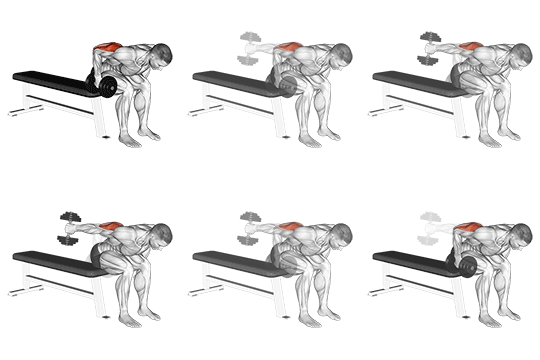
Dumbbell Seated Bent Over Triceps Extension
Sit with both feet planted and hinge forward, then extend and return both forearms together. Keep the upper arms near the torso and the head aligned with the spine.
Go to the movement stepsAlso known as: Dumbbell Seated Bent Over Tricep Extension, Db Seated Bent Over Triceps Extension, Dumbell Seated Bent Over Triceps Extension
- Category
- Upper Arms
- Equipment
- Two Dumbbells And Stable Flat Bench
- Movement focus
- Seated bilateral kickback under the triceps-extension name
Exercise reference published by PlanWorkouts; see our editorial standards.
How to Do the Dumbbell Seated Bent Over Triceps Extension
- Sit on a bench, feet planted flat on the floor, gripping a dumbbell in each hand.
- Hinge forward to a comfortable position with the trunk steady and head aligned with the spine. Hold the dumbbells with the palms facing inward and upper arms near the torso.
- Straighten both elbows together through a comfortable range, moving the forearms behind you without raising the upper arms or placing the elbows near the head.
- Hold for a moment at the top, then bring the dumbbells back down slowly.
- Maintain the same support and controlled hinge throughout; set the weights down before changing position.
Practice and progression
Use a load and comfortable elbow range that keep the upper arms, wrists and torso controlled. Stop before a forced lockout or a swinging return. Put the weights down before changing the support or stance, and stop if pain develops.
Technique references: University of Arkansas: original seated kickback, page 4; Muscle & Strength: original seated one-arm kickback. The university seated kickback instructions and original seated one-arm guide supply the hinge, inward grip, upper arms near the body and controlled return components. They do not establish a special biomechanical advantage or a different muscle stimulus for this exercise name.
Technique & Form Tips
Both forearms extend together from a seated hinge. This is the same broad physical task family as the seated kickback; a different name alone does not establish a different muscle stimulus.
Common Mistakes to Avoid
- Moving the upper arm or forcing the finish: Keep the upper arm near the torso while the forearm moves. Avoid swinging the shoulder, rotating the trunk, snapping the elbow straight or bending the wrist to lift the dumbbell.
How to Breathe During This Exercise
Breathe continuously, matching your inhale and exhale to the pace of your repetitions.
Comfort and Control
Stop if the movement causes pain. If you have an existing condition, ask a qualified professional about an appropriate exercise and range.
General guidance: Mayo Clinic on weight-training technique. Follow the specific movement steps above for this variation.
Community questions about this movement
For questions and discussions, visit the workout community. Community posts are separate from this exercise guide.