Upper Arms Exercise · Barbell
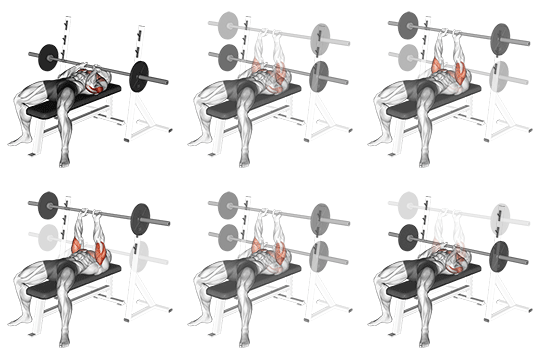
Barbell Close-Grip Bench Press
This close-grip version presses one straight bar with the hands close together while the feet stay on the floor and the body stays supported by a flat bench. The elbows bend nearer the torso than in the wider-grip demonstration. Close means narrower than your ordinary press, not a requirement to force the hands together or a guarantee of wrist and shoulder protection.
Go to the movement stepsAlso known as: Bb Close-grip Bench Press
- Category
- Upper Arms
- Equipment
- Barbell
- Target
- Triceps
Exercise reference published by PlanWorkouts; see our editorial standards.
How to Do the Barbell Close-Grip Bench Press
- Inspect the bench, rack and collars, arrange compatible hooks and safeties according to the equipment instructions, and agree with a competent spotter on lift-off, help and reracking. Check the path unloaded before adding a working load.
- Lie face up with feet stable on the floor and the head, upper back and hips supported. Set the shoulders against the bench without forcing a painful back or wrist position.
- Take an even overhand grip with thumbs around the bar. Start around shoulder width and adjust to a comfortable narrower-than-usual grip that you can control; do not force the hands to touch simply to copy the small drawing.
- Establish the grip and upper-back support before taking the bar clear of the hooks with the spotter ready. Let it settle above the shoulders, then lower it toward a comfortable chest contact point with the elbows nearer the torso, without squeezing them rigidly against the ribs.
- Pause briefly once the bar touches your chest.
- Press the bar back up to the starting position, fully extending your arms.
- Keep the wrists controlled and the bench/foot support stable without bouncing or lifting the hips. Rerack onto both hooks with the planned assistance, confirm the bar is supported, then release the grip.
Choose a grip, not a slogan
ACE describes hands around shoulder width for close-grip pressing, while NASM describes slightly narrower spacing. These are starting descriptions, not a compulsory distance for every lifter. Keep a secure overhand grip and adjust only while the bar is supported.
The variation is still a press
Compared with the wider flat-bench loop, the hands are closer together and the upper arms stay nearer the body. The chest and shoulders still participate. This guide does not promise isolated triceps work, automatic lockout improvement or a particular muscle-growth result.
Technique references: ACE original close-grip bench-press instructions; Claire Zai, Barbell Medicine original bench grip and setup coaching; CSCCa original barbell bench setup, support and spotting text; NSCA original facility/equipment safety checklist, PDF text; NASM original close-grip setup text; only grip description used. Close hand spacing, bench/foot support and elbow-driven pressing are observed. Exact grip width, personal wrist tolerance, muscle-force distribution, lockout limitation and injury outcomes remain unverified; no external video was watched.
Technique & Form Tips
This remains a compound chest, shoulder and elbow press with a narrower hand arrangement. The triceps help straighten the elbows, but the drawing does not measure their share of force, prove they are an individual lifter’s limiting muscle or show that elbow tuck prevents injury. Narrowing the grip can also change the comfortable chest touch point.
Common Mistakes to Avoid
- Equating close grip with touching hands: Choose an even comfortable grip with controlled wrists; no exact hand spacing is measured from this perspective.
- Pinning the elbows or assuming protection: Let the elbows bend nearer the torso without forcing a painful tuck; a narrower grip does not guarantee a safer outcome.
- Treating it as a straight-arm pullover: The bar lowers by bending the elbows and returns by pressing; keep bench support and a planned rack/spotter procedure.
How to Breathe During This Exercise
For a manageable practice load, keep breathing controlled. Exhale during the pushing phase and inhale during the return. Get individual coaching for heavy-load bracing or relevant health concerns rather than treating this loop as a universal breathing prescription.
Comfort and Control
Stop if the movement causes pain. If you have an existing condition, ask a qualified professional about an appropriate exercise and range.
General guidance: Mayo Clinic on weight-training technique. Follow the specific movement steps above for this variation.
Featured in Curated Workouts
Train the Barbell Close-Grip Bench Press with structured progression in these complete workout routines:
Push Day: Bench Press, Incline & Triceps
The definitive science-backed Push workout targeting chest, anterior delts, and triceps.



Upper Body Power: Heavy Bench & Rows
High-yield horizontal and vertical push-pull split building thick chest, broad back, and shoulder mass.

Community questions about this movement
For questions and discussions, visit the workout community. Community posts are separate from this exercise guide.