Upper Arms Exercise · Barbell And Flat Bench; Trained Assistance For Transfers
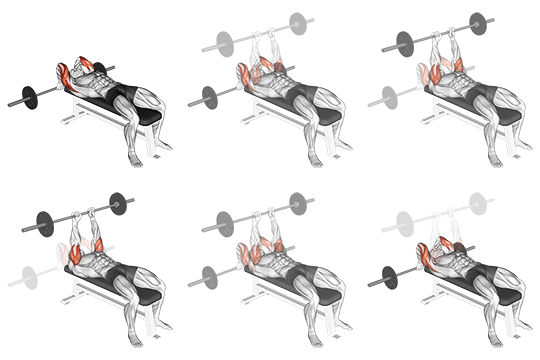
Barbell Lying Back Of The Head Tricep Extension
This lying triceps extension sends the bar behind the head as the elbows bend. The upper arms shift slightly toward the head and return with the bar, rather than staying rigidly vertical throughout. Keep this head-side arc distinct from a forehead-endpoint extension or a chest press.
Go to the movement stepsAlso known as: Bb Lying Back Of The Head Tricep Extension
- Category
- Upper Arms
- Equipment
- Barbell And Flat Bench; Trained Assistance For Transfers
- Movement focus
- Behind-head extension with a controlled upper-arm shift
Exercise reference published by PlanWorkouts; see our editorial standards.
How to Do the Barbell Lying Back Of The Head Tricep Extension
- Arrange the handoff and return with a trained partner, and have qualified staff teach the complete handling before adding resistance. The animation shows repetitions but not those transfers.
- Lie on a bench with your feet flat on the floor and your head near the end of the bench.
- Keep the head, upper back and buttocks supported; near the end does not mean hanging the head beyond the bench. Settle your body before receiving the bar.
- Use a secure overhand grip with thumbs wrapped around the bar and comfortable even spacing around shoulder width. With assistance as needed, establish control above the upper body before lowering.
- Bend the elbows to bring the bar behind the head along the pictured arc. Allow the small controlled headward upper-arm shift rather than forcing a fixed vertical arm position.
- Keep the bar clear of the face and head. Stop at a depth you control without a shoulder throw, forced stretch or lifting the torso from the bench.
- Pause briefly, then straighten your arms back to the starting position.
- Finish while control remains and use the agreed assisted return. Confirm secure support of the bar before releasing your hands.
Name the bar path before selecting cues
Behind-head and forehead-endpoint teaching both exist. The old fixed-upper-arm cue does not describe every part of this loop; do not combine endpoints or assume all skull-crusher labels mean the same motion.
Individual fit, not a shoulder diagnosis
A suitable range, hand spacing and load depend on your control and comfort. The demonstration does not identify shoulder problems or justify recommending this exercise for or against a particular condition.
Technique references: StrengthLog original behind-head lying-extension instructions; Tiger Fitness original behind-head extension and small arm shift; Breaking Muscle original partner-assisted starting setup. Learn the handoff, head support and return with qualified instruction. The loop does not show those transfers or establish your grip fit, depth or load. Stop if the movement causes pain.
Technique & Form Tips
Elbow bending and straightening drive the repetition while a small upper-arm shift accompanies the behind-head arc. The illustration does not measure muscle stretch or establish a shoulder-mobility threshold, a personal load or a safety advantage over another version.
Common Mistakes to Avoid
- Erratic tempo: Avoid rushing; perform each phase of the movement with deliberate, steady control.
- Forcing a fixed elbow position or extra depth: Follow a controlled head-side path without turning the small arm shift into a pullover swing. More depth is not automatically a better repetition.
- Losing head support: Keep the head on the bench and arrange assistance rather than trying to catch or transfer the bar behind the head.
How to Breathe During This Exercise
Breathe steadily throughout the movement.
Comfort and Control
Stop if the movement causes pain. If you have an existing condition, ask a qualified professional about an appropriate exercise and range.
General guidance: Mayo Clinic on weight-training technique. Follow the specific movement steps above for this variation.
Community questions about this movement
For questions and discussions, visit the workout community. Community posts are separate from this exercise guide.