Upper Arms Exercise · Cable
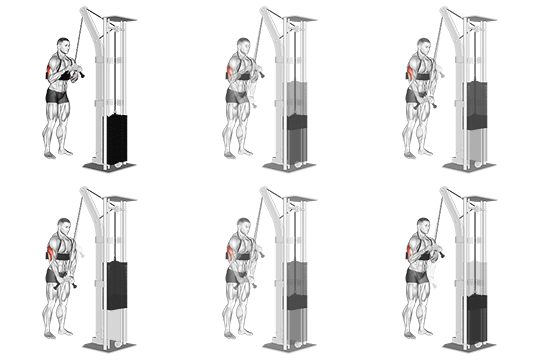
Cable Triceps Pushdown (v-Bar) (with Arm Blaster)
Also known as: Cable Tricep Pushdown (V-bar) (With Arm Blaster)
- Category
- Upper Arms
- Equipment
- Cable
- Target
- Triceps
Biomechanical cues verified by the PlanWorkouts Science Review Board under CSCS editorial oversight; see our editorial standards.
The Cable Triceps Pushdown (v-Bar) (with Arm Blaster) is a targeted isolation upper arms movement designed to train the Triceps.
Single-joint elbow extension isolating the triceps brachii (lateral, medial, and long heads). Keep upper arm fixed to prevent shoulder momentum. Executing this with strict form maximizes muscle fiber recruitment while protecting joint structures.
Quick Exercise Facts
Target Muscle Activation
Using a V-bar with an arm blaster locks the elbows against a pad, removing nearly every way to cheat a triceps pushdown with shoulder or body movement. It's a specialized setup for anyone whose elbows tend to drift forward on standard pushdowns, turning what's often a sloppy exercise into a genuinely strict one. Expect to use less weight than a normal pushdown until the arms adjust to the added strictness.
How to Do the Cable Triceps Pushdown (v-Bar) (with Arm Blaster)
- Attach a v-bar to the top pulley of the cable machine.
- Stand facing the machine with your feet set shoulder-width apart.
- Grasp the v-bar using an overhand grip, palms down, hands shoulder-width apart.
- Keep your elbows close to your torso and your upper arms motionless throughout the set.
- Engage your triceps and breathe out as you drive the v-bar down until your arms fully straighten.
- Pause momentarily at the bottom, contracting your triceps.
- Breathe in as you slowly bring the v-bar back up to the starting position under control.
- Execute the desired number of reps with smooth cadence and consistent focus on the triceps.
Recommended Sets & Reps by Training Goal
65–75% 1RM · 60s rest
50–60% 1RM · 30–45s rest
Controlled 3s eccentric · 60s rest
Biomechanical & Joint Load Cues
Single-joint elbow extension isolating the triceps brachii (lateral, medial, and long heads). Keep upper arm fixed to prevent shoulder momentum.
Common Mechanical Mistakes & Form Errors to Avoid
- Flaring Elbows Outward: Allowing elbows to wing outward during pushdowns or extensions shifts tension to the chest and shoulders while stressing elbow ligaments.
- Moving the Upper Arms: Swinging the humerus back and forth turns the movement into a lat pullover rather than isolated elbow extension.
- Incomplete Lockout Extension: Stopping short of full arm extension prevents full recruitment of the triceps medial and lateral heads.
Proper Breathing Patterns & Core Engagement
Inhale as elbow flexes to full stretch; exhale as forearm extends straight.
Add the Cable Triceps Pushdown (v-Bar) (with Arm Blaster) to Your Custom Workout Routine
Build a personalized, science-backed workout plan matching your training goals, equipment access, and schedule.
Injury Modification & Joint Safety
Individuals with triceps tendon irritation at the elbow should avoid excessive deep elbow flexion (>90°) on skull crushers and prefer cable pressdowns. If joint irritation persists, immediately stop and substitute this movement with another exercise from the Upper Arms exercises category.
Muscles Worked
The Cable Triceps Pushdown (v-Bar) (with Arm Blaster) primarily targets the Triceps, with Forearms as the primary synergist muscle group.
More Upper Arms Exercises
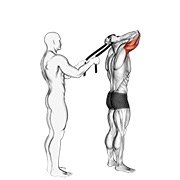 Assisted Standing Triceps Extension (with Towel)
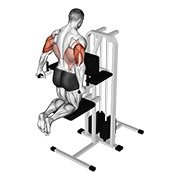 Assisted Triceps Dip (kneeling)
 Band Alternating Biceps Curl
 Band Close-Grip Push-Up
 Band Concentration Curl
 Band One Arm Overhead Biceps Curl
More Triceps Exercises
 Band Side Triceps Extension
 Barbell Close-Grip Bench Press
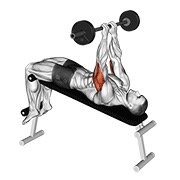 Barbell Decline Close Grip To Skull Press
 Barbell Incline Close Grip Bench Press
 Barbell Incline Reverse-Grip Press
 Barbell Jm Bench Press
Equipment Alternatives
Don't have cable? These target the same triceps with different equipment.
 Bench Dip (knees Bent)
Band Side Triceps Extension
Barbell Close-Grip Bench Press
Bench Dip (knees Bent)
Band Side Triceps Extension
Barbell Close-Grip Bench Press
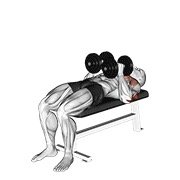 Dumbbell Close Grip Press
FAQ
- What muscles does the Cable Triceps Pushdown (v-Bar) (with Arm Blaster) work?
- The Cable Triceps Pushdown (v-Bar) (with Arm Blaster) primarily targets the triceps as the primary agonist. The forearms acts as the primary supporting muscle group during force transmission. Maintaining strict biomechanical alignment ensures maximal tension remains focused on the intended muscle fibers rather than shifting to surrounding stabilizer joints.
- What equipment do I need for the Cable Triceps Pushdown (v-Bar) (with Arm Blaster)?
- The Cable Triceps Pushdown (v-Bar) (with Arm Blaster) is performed using a cable. Ensure all equipment is securely positioned with collars or safety pins locked before loading working sets. If you train in a home gym or minimal setup, explore our equipment-free and resistance band alternatives below.
- What is the most common form mistake on the Cable Triceps Pushdown (v-Bar) (with Arm Blaster)?
- The most frequent error is flaring elbows outward: Allowing elbows to wing outward during pushdowns or extensions shifts tension to the chest and shoulders while stressing elbow ligaments.. Controlling the 2 to 3-second eccentric lowering phase ensures maximal hypertrophic stimulus while shielding connective tissue.
- How many sets and reps should I perform on the Cable Triceps Pushdown (v-Bar) (with Arm Blaster)?
- For muscle growth and density, execute 3 to 4 working sets of 10 to 15 controlled repetitions with 60 seconds rest, emphasizing a deep stretch and deliberate peak contraction on every rep.
- What's a good alternative to the Cable Triceps Pushdown (v-Bar) (with Arm Blaster)?
- If you don't have access to a cable, the Bench Dip (knees Bent) targets the same triceps using body weight instead. This alternative replicates the same joint angle and movement plane while allowing you to train effectively with different available gear. You can also substitute it seamlessly in our free Workout Plan Builder.