Shoulders Exercise · Weighted
Biomechanical cues verified by the PlanWorkouts Science Review Board under CSCS editorial oversight; see our editorial standards.
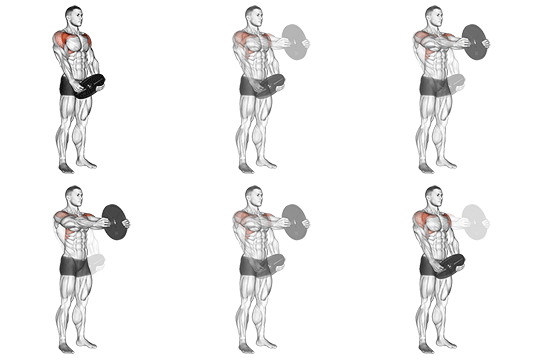
The Weighted Front Raise is a targeted isolation shoulders movement designed to train the Delts with direct engagement of the Forearms.
Single-joint abduction or horizontal abduction isolating the lateral, anterior, or posterior deltoid heads through a curved arc of motion. Executing this with strict form maximizes muscle fiber recruitment while protecting joint structures.
Quick Exercise Facts
Target Muscle Activation
The front raise isolates the anterior deltoid almost exclusively, lifting a weight straight out in front of the body with essentially no help from other shoulder muscles. It's often overtrained relative to the rest of the shoulder, since the front delt already gets significant work from any pressing movement — so it's worth asking whether more front raise volume is actually needed before adding it. Controlled tempo matters more than heavy weight here.
How to Do the Weighted Front Raise
- Stand with your feet shoulder-width apart, holding a dumbbell in each hand with your palms facing your thighs.
- Keeping your arms straight, exhale and lift the dumbbells in front of you until they are at shoulder level.
- Pause briefly at the top, then inhale and slowly lower the dumbbells back down to the starting position.
- Repeat for your desired repetitions, keeping constant tension on the working muscle throughout.
Recommended Sets & Reps by Training Goal
65–75% 1RM · 60s rest
50–60% 1RM · 30–45s rest
Controlled 3s eccentric · 60s rest
Biomechanical & Joint Load Cues
Single-joint abduction or horizontal abduction isolating the lateral, anterior, or posterior deltoid heads through a curved arc of motion.
Common Mechanical Mistakes & Form Errors to Avoid
- Shrugging the Trapezius: Elevating the shoulder blades to hike the weight up shifts mechanical tension off the lateral deltoid onto the upper traps.
- Leading with Hands Instead of Elbows: Lifting wrists higher than elbows rotates the shoulder into internal impingement; keep elbows level with or slightly above wrists.
- Using Heavy Body English: Swinging the torso to launch heavy dumbbells turns an isolation exercise into a sloppy momentum drill with minimal delt tension.
Proper Breathing Patterns & Core Engagement
Exhale smoothly as the weights are raised to shoulder height; inhale during the controlled 2-3 second descent.
Add the Weighted Front Raise to Your Custom Workout Routine
Build a personalized, science-backed workout plan matching your training goals, equipment access, and schedule.
Injury Modification & Joint Safety
If experiencing subacromial pinch during lateral raises, angle arms 15–30 degrees into the scapular plane (slightly forward of direct sideways). If joint irritation persists, immediately stop and substitute this movement with another exercise from the Shoulders exercises category.
Muscles Worked
The Weighted Front Raise primarily targets the Delts, with Biceps as the primary synergist muscle group, along with the Forearms.
More Shoulders Exercises
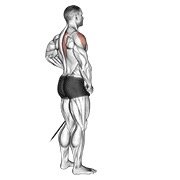 Band Front Lateral Raise
 Band Front Raise
 Band Reverse Fly
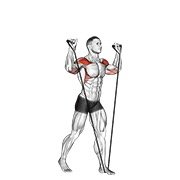 Band Shoulder Press
 Band Standing Rear Delt Row
 Band Twisting Overhead Press
More Delts Exercises
 Band Y-Raise
 Barbell Front Raise
 Barbell One Arm Snatch
 Barbell Rear Delt Raise
 Barbell Rear Delt Row
 Barbell Seated Behind Head Military Press
Equipment Alternatives
Don't have weighted? These target the same delts with different equipment.

FAQ
- What muscles does the Weighted Front Raise work?
- The Weighted Front Raise primarily targets the delts as the primary agonist. Synergist assistance is provided by the biceps along with the forearms. Maintaining strict biomechanical alignment ensures maximal tension remains focused on the intended muscle fibers rather than shifting to surrounding stabilizer joints.
- What equipment do I need for the Weighted Front Raise?
- The Weighted Front Raise is performed using a weighted. Ensure all equipment is securely positioned with collars or safety pins locked before loading working sets. If you train in a home gym or minimal setup, explore our equipment-free and resistance band alternatives below.
- What is the most common form mistake on the Weighted Front Raise?
- The most frequent error is shrugging the trapezius: Elevating the shoulder blades to hike the weight up shifts mechanical tension off the lateral deltoid onto the upper traps.. Controlling the 2 to 3-second eccentric lowering phase ensures maximal hypertrophic stimulus while shielding connective tissue.
- How many sets and reps should I perform on the Weighted Front Raise?
- For muscle growth and density, execute 3 to 4 working sets of 10 to 15 controlled repetitions with 60 seconds rest, emphasizing a deep stretch and deliberate peak contraction on every rep.
- What's a good alternative to the Weighted Front Raise?
- If you don't have access to a weighted, the Left Hook. Boxing targets the same delts using body weight instead. This alternative replicates the same joint angle and movement plane while allowing you to train effectively with different available gear. You can also substitute it seamlessly in our free Workout Plan Builder.