Shoulders Exercise · One Dumbbell And Stable Flat Bench
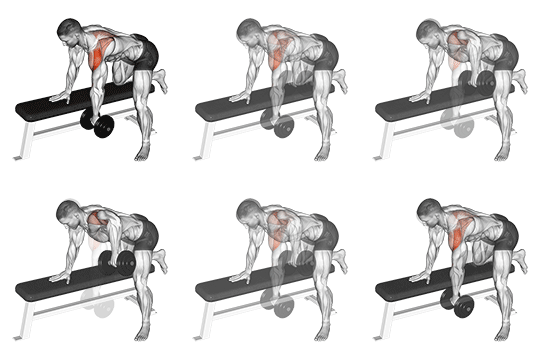
Dumbbell Rear Delt Row_shoulder
Support one hand and knee on the bench and row one dumbbell with the opposite arm. Let the working elbow travel outward through a comfortable path while it bends, then lower the weight under control. This is not a two-weight standing lateral raise.
Go to the movement stepsAlso known as: Db Rear Delt Row_shoulder, Dumbell Rear Delt Row_shoulder
- Category
- Shoulders
- Equipment
- One Dumbbell And Stable Flat Bench
- Movement focus
- One-weight bench-supported row with an outward elbow path
Exercise reference published by PlanWorkouts; see our editorial standards.
How to Do the Dumbbell Rear Delt Row_shoulder
- Arrange the weight and any needed help before taking support. Put one hand and the same-side knee on a stable bench, keep the opposite foot on the floor and settle the torso before picking up the weight.
- Let the weight hang under the working shoulder with a steady wrist and comfortable grip. Keep the neck aligned with the torso and the body supported.
- Bend the working elbow and draw the upper arm outward and back to row toward the side of the upper torso. Do not force a numeric elbow angle or throw the weight into a straight-arm raise.
- Hold briefly at the top, then lower the dumbbell back down under control.
- Repeat while maintaining hand, knee and foot support. Set the weight down before changing sides or moving the supporting limbs.
Range, support and handling
Use a load you can position, move and set down securely. Keep a firm grasp and steady wrists, and use a range that lets you maintain your body support without jerking, rolling or a forced shoulder squeeze. Stop if pain develops. Arrange help before the set if you cannot reach or remove the weights while staying stable.
Technique references: ACE: hand-and-knee bench row and outward-elbow variation; Mayo Clinic: written bent-over row instructions. ACE describes a hand-and-knee row and an outward-elbow variation; Mayo supplies ordinary controlled rowing and trunk components. The source numeric90-degree variation is not a universal target. Only one weight is used in this setup.
Technique & Form Tips
One working elbow bends during a supported row. The outward path does not establish simultaneous growth of shoulder width and upper-back thickness or a separate fixed-elbow fly phase.
Common Mistakes to Avoid
- Jerking the weight: Match the demonstrated shoulder and arm movement rather than jerking the weight up. Do not force the shoulder blades to stay fixed.
- Swinging the weight: Control the descent and ascent to prevent swinging the weight.
How to Breathe During This Exercise
Maintain a steady breathing rhythm that supports your movement tempo.
Comfort and Control
Stop if the movement causes pain. If you have an existing condition, ask a qualified professional about an appropriate exercise and range.
General guidance: Mayo Clinic on weight-training technique. Follow the specific movement steps above for this variation.
Community questions about this movement
For questions and discussions, visit the workout community. Community posts are separate from this exercise guide.