Upper Arms Exercise · Two Dumbbells; Exact Hinged Single-Leg Entry And Support Protocol Unresolved
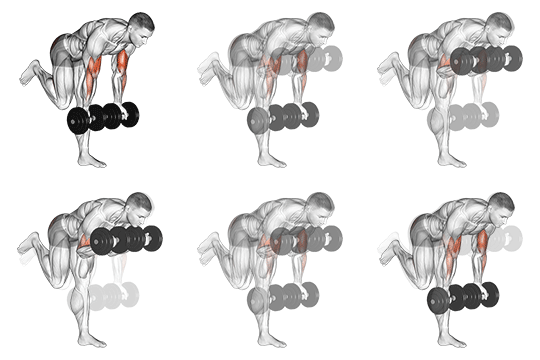
Dumbbell Bicep Curl With Stork Stance
The figure holds a forward-hinged torso on one supporting foot while curling both dumbbells. The other knee is bent and that foot stays off the floor; this is not an upright curl with the rear toes used for support.
View setup and limitsAlso known as: Db Bicep Curl With Stork Stance, Dumbell Bicep Curl With Stork Stance
- Category
- Upper Arms
- Equipment
- Two Dumbbells; Exact Hinged Single-Leg Entry And Support Protocol Unresolved
- Movement focus
- Reference: hinged single-leg curl with the rear foot off the floor
Exercise reference published by PlanWorkouts; see our editorial standards.
Demonstration Setup and Limits
- The torso remains markedly inclined forward with both dumbbells below the shoulders at the low position.
- One foot supports the body while the other knee is bent behind the figure and its foot remains airborne.
- Both elbows bend and return in that balance position. The loaded entry, appropriate support, range and controlled exit are not established by this reference.
Use established support
Choose an ordinary stable-standing or seated curl until the hinged single-leg setup and safe transitions are established. Do not infer a rear-toe support that the illustration does not show.
Technique references: Mayo Clinic: original biceps-curl transcript. Mayo supplies an ordinary curl component, not this forward-hinged single-leg setup. Upright single-leg balance instructions cannot substitute for a matching loaded hinge/curl protocol.
Technique & Form Tips
The torso remains hinged while the forearms move. The reduced base of support does not make swinging or loss of balance impossible.
Common Mistakes to Avoid
- Filling in the missing loaded setup from the name: The illustration does not establish the missing support, entry, range or exit. Resolve those details before attempting the loaded variation.
How to Breathe During This Exercise
Breathe steadily throughout the movement, ideally exhaling during the contraction phase.
Comfort and Control
Stop if the movement causes pain. If you have an existing condition, ask a qualified professional about an appropriate exercise and range.
General guidance: Mayo Clinic on weight-training technique. Follow the specific movement steps above for this variation.
Community questions about this movement
For questions and discussions, visit the workout community. Community posts are separate from this exercise guide.