Cardio Exercise · Skierg Machine
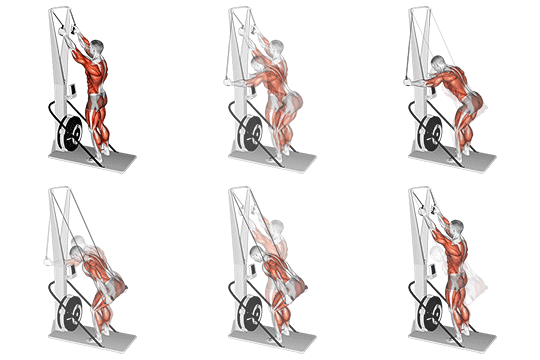
Standing Ski Ergometer
The standing ski ergometer uses a double-pole motion: both handles move down toward the thighs as your torso, hips and knees join the pull. This demonstration is a standing cardio movement, not a seated triceps extension. Seated and alternating-arm skiing use different setups.
Go to the movement stepsCheck your setup before you start
Learn the standing double-pole setup before increasing effort. Begin with a short, comfortable bout and build duration gradually. Seated adaptive skiing and alternating-arm technique are different options; use guidance for the setup you choose.
- Equipment and support: a securely installed ski ergometer with two overhead handles.
- Stand facing the machine with stable footing. Take both handles and raise your hands to around head height with the elbows bent.
- This demonstration stands on the floor; it does not use a seat or footrests.
This summary uses the checked guidance on this page. Read the full movement steps and compare the demonstration before starting.
- Category
- Cardio
- Equipment
- Skierg Machine
- Movement focus
- Cardiovascular System
Exercise reference published by PlanWorkouts; see our editorial standards.
How to Do the Standing Ski Ergometer
- Stand facing the machine with stable footing. Take both handles and raise your hands to around head height with the elbows bent.
- Start the downward drive with your torso and a small hip hinge, letting the arms follow rather than pulling only with the elbows.
- Let the knees bend as the handles move down beside your thighs. Keep the wrists comfortable and avoid a deep squat or forced elbow lockout.
- Return smoothly to the upright starting position as the handles rise. Do not let the cords yank your arms upward.
- Repeat at an effort you can sustain with the same rhythm. Follow your machine instructions for its damper and monitor controls.
SkiErg technique and beginner pacing
Learn the standing double-pole setup before increasing effort. Begin with a short, comfortable bout and build duration gradually. Seated adaptive skiing and alternating-arm technique are different options; use guidance for the setup you choose.
Quick Exercise Facts
Technique references: Concept2 SkiErg technique; Concept2 getting started. Machine controls vary; follow the instructions for your model.
Cardio Pacing & Duration
Begin with a short bout you can complete while maintaining the demonstrated movement. Use time, distance or manageable repetitions appropriate to the activity, then build duration gradually before increasing effort.
For moderate aerobic effort, you can generally talk but not sing. Machine levels, speeds and calorie estimates are not interchangeable between people or equipment.
Technique & Form Tips
The standing pull involves the torso, lats, arms and lower body together. Hinging at the hips and bending the knees distinguish it from an arm-only extension. A SkiErg damper changes airflow and stroke feel; it is not a weight-stack selector.
Common Mistakes to Avoid
- Using the seated instructions: This demonstration stands on the floor; it does not use a seat or footrests.
- Pulling only with the arms: Let the torso and hips begin the standing stroke, with the arms following.
- Rushing the return: Allow a smooth recovery before starting the next pull.
How to Breathe During This Exercise
Breathe continuously; try breathing out during the drive and in during the smooth recovery.
Add the Standing Ski Ergometer to Your Custom Workout Routine
Build a personalized, science-backed workout plan matching your training goals, equipment access, and schedule.
Comfort and Control
Stop if the movement causes pain. If you have an existing condition, ask a qualified professional about an appropriate exercise and range. If discomfort persists, stop and ask a qualified professional about an appropriate exercise and range.
General guidance: CDC on aerobic activity intensity. Follow the specific movement steps above for this variation.
Cardio Training Focus
The Standing Ski Ergometer is a conditioning activity. Follow its specific movement steps and choose a pace you can control; the cardiovascular system is a training focus, not a single muscle to squeeze or isolate.
More Cardio Exercises
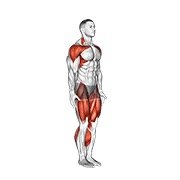 Astride Jumps with Side Arm Raises
 Alternating Step-Back with Floor Reach
 Bear Crawl with Knees Off the Floor
 Burpee without a Push-Up
 Fan Bike with Moving Handles
 Dumbbell Burpee
Related trunk movements
 Alternating High-Knee Running
 Seated Arm Ergometer
 Wall-Supported High Knees
 Jack Burpee with a Plank Jack
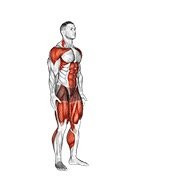 Straddle Jack Jump
 Jump Rope
FAQ
- How should I pace the Standing Ski Ergometer?
- Begin at an effort that lets you maintain the demonstrated movement. For moderate aerobic effort, the CDC talk test means you can generally talk but not sing. Pace and duration depend on your experience, fitness and the activity; a machine's level is not a universal intensity.
- What equipment do I need for the Standing Ski Ergometer?
- You do the Standing Ski Ergometer with a securely installed ski ergometer with two overhead handles. Make sure your equipment is set up safely before starting. If you work out at home or have limited gear, check out our alternative exercises below.
- What form mistake should I watch for on the Standing Ski Ergometer?
- Watch for using the seated instructions: This demonstration stands on the floor; it does not use a seat or footrests.. Reduce the effort or stop if you cannot maintain the setup.
- How long should I perform the Standing Ski Ergometer?
- Use a manageable bout of time, distance or repetitions suited to the activity. Start short, then build duration gradually before adding harder effort. Continuous machine work and short bodyweight circuits need different pacing; there is no single sets-and-reps target for all cardio movements.