Shoulders Exercise · Dumbbell
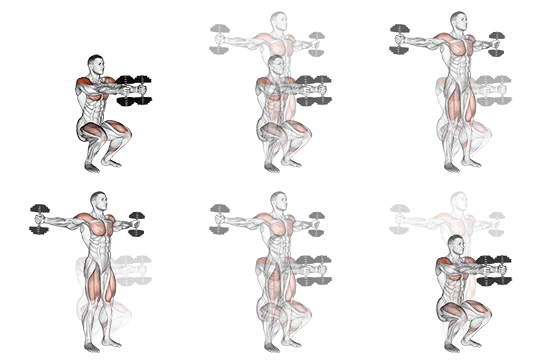
Dumbbell Iron Cross
The iron cross lowers the arms out to the sides and down in a wide arc, essentially a slow-motion lateral raise combined with a stretch through the chest and shoulders. It demands serious shoulder stability and control, since the arms are furthest from the body — and therefore hardest to control — at the bottom of the movement. This is one to build up to gradually with very light weight rather than one to load heavy.
Go to the movement stepsAlso known as: Db Iron Cross, Dumbell Iron Cross
Exercise reference published by PlanWorkouts; see our editorial standards.
How to Do the Dumbbell Iron Cross
- Stand with feet shoulder-width apart, a dumbbell in each hand held at your sides.
- Raise your arms out to the sides until parallel to the floor, forming a T shape with your body.
- Pause briefly, then slowly lower your arms back to the starting position.
- Complete your planned set count, emphasizing full range of motion and strong peak contraction in the delts.
Quick Exercise Facts
Practice and progression
Choose a short set of controlled repetitions or a manageable hold, following this movement's setup. End the set when you lose the demonstrated position. Build control before increasing repetitions, duration or resistance; holds, carries and moving drills need different prescriptions.
Technique & Form Tips
Use the movement steps and demonstration for this particular exercise. Match the body position, support points and direction of movement before adding resistance or speed. Holds, cardio movements and lifting exercises need different execution cues.
Common Mistakes to Avoid
- Erratic tempo: Avoid rushing; perform each phase of the movement with deliberate, steady control.
- Copying another exercise setup: Follow this exercise's demonstrated support and body position rather than applying an unrelated lifting cue.
- Losing support: Keep the demonstrated footing, grip or support secure throughout the movement.
How to Breathe During This Exercise
Breathe steadily throughout the movement.
Add the Dumbbell Iron Cross to Your Custom Workout Routine
Build a personalized, science-backed workout plan matching your training goals, equipment access, and schedule.
Comfort and Control
Choose a load and range you can control. Stop if the movement causes pain. If discomfort persists, stop and ask a qualified professional about an appropriate exercise and range.
General guidance: Mayo Clinic on weight-training technique. Follow the specific movement steps above for this variation.
Muscles Worked
The Dumbbell Iron Cross mainly targets your Delts, with your Triceps helping support the movement, along with your Chest.
More Shoulders Exercises
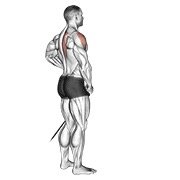 Band Front Lateral Raise
 Band Front Raise
 Band Reverse Fly
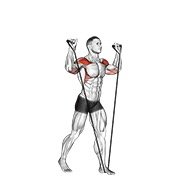 Band Shoulder Press
 Band Standing Rear Delt Row
 Band Twisting Overhead Press
More Delts Exercises
 Band Y-Raise
 Barbell Front Raise
 Barbell One Arm Snatch
 Barbell Rear Delt Raise
 Barbell Rear Delt Row
 Barbell Seated Behind Head Military Press
FAQ
- What muscles does the Dumbbell Iron Cross work?
- The Dumbbell Iron Cross mainly works your delts. It also helps strengthen your triceps and chest. Using good, smooth form makes sure you work the right muscles and avoid unnecessary strain on your joints.
- What equipment do I need for the Dumbbell Iron Cross?
- You do the Dumbbell Iron Cross with a dumbbell. Make sure your equipment is set up safely before starting. If you work out at home or have limited gear, check out our alternative exercises below.
- What form mistake should I watch for on the Dumbbell Iron Cross?
- One mistake to watch for is erratic tempo: Avoid rushing; perform each phase of the movement with deliberate, steady control.. Use a comfortable range and a controlled return; reduce the load if you cannot maintain the demonstrated setup.
- How many sets and reps should I perform on the Dumbbell Iron Cross?
- Use a short set of controlled repetitions, or a manageable hold when the movement is static. Stop when you cannot maintain the demonstrated position. Build control before adding duration, repetitions or resistance; the appropriate amount depends on the exercise and your experience.