Bodyweight & Home · Bodyweight · Intermediate
Push-Up Mastery & Chest Progression Circuit
A comprehensive bodyweight pushing protocol utilizing biomechanical leverage variations to overload the chest, front deltoids, and triceps without requiring a single weight plate or bench.
Duration
25 Min
Equipment
Bodyweight
Targets
Pectorals, Triceps, Deltoids
Level
Intermediate
Est. Burn
~220 kcal
Part of Multi-Day Plan
3-Day Bodyweight & Calisthenics Strength Program
8-week structured training cycle with progressive overload and scheduled rest days.
Weekly Schedule:
Interactive Workout Player
Live Mode
00:00
timer
Active Movement
1 of 4: clock push-up
Set 1 of 3
Calculated Burn
0 kcal
Live MET Estimation
Workout Routine Schedule (4 Movements)
Complete each movement in order. Tap the checkmark after each set to track your progress, or tap Swap to change equipment.
#1
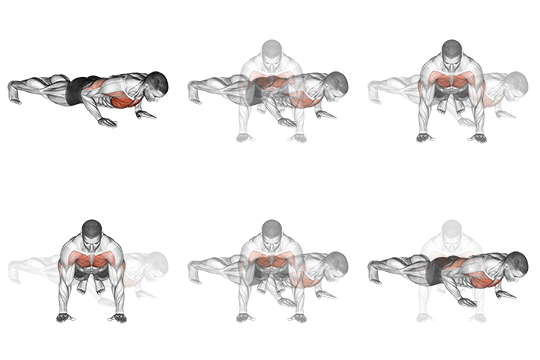
Clock Push-Up
Form Tip: Move your hands in alternating positions along a clock perimeter to alter fiber angle recruitment.
Set 1
10 reps
Set 2
10 reps
Set 3
10 reps
#2

Close-Grip Push-Up
Form Tip: Set hands inside shoulder-width and drive directly through the palms with elbows hugging the ribs.
Set 1
12 reps
Set 2
12 reps
Set 3
12 reps
Set 4
12 reps
#3
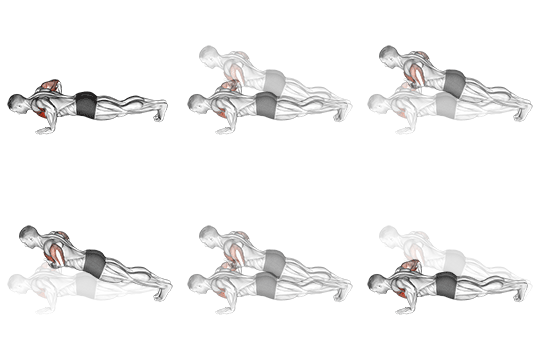
Chest Tap Push-Up (male)
Form Tip: Explode off the floor with enough speed to touch your chest with the opposite hand before catching yourself smoothly.
Set 1
10 reps per side
Set 2
10 reps per side
Set 3
10 reps per side
#4
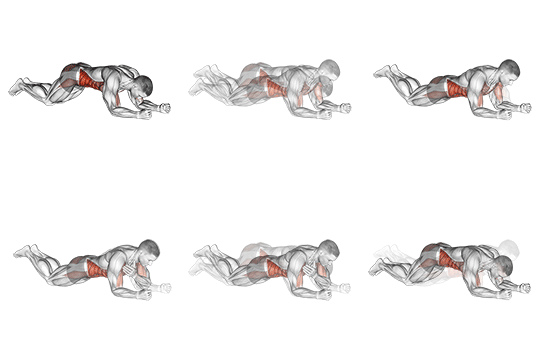
Kneeling Plank Tap Shoulder (male)
Form Tip: Finish the session by burning out the stabilizers in an isometric pushup position.
Set 1
15 taps
Set 2
15 taps
Set 3
15 taps
Coaching Tips & Progression Advice
- Keep the glutes squeezed and pelvis posterior-tilted to prevent lumbar hyperextension.
- Ensure the chest reaches within 2 inches of the floor on every rep for complete range of motion.
- Spread the fingers wide into the floor to optimize wrist comfort and pressing leverage.
Post-Workout Fuel
Browse High-Protein Meals →
What to Eat After This Workout
Aim for 35g protein to repair micro-tears in the pectorals and anterior deltoids.