Waist Exercise · Stable Flat Bench; Body Weight
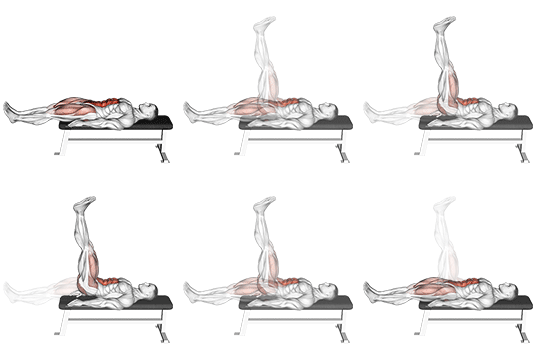
Lying Leg Raise Flat Bench
With the head and back supported by a flat bench, raise the long legs together and lower them with control. Keep the pelvis supported rather than adding the bent-knee pelvic curl of the separate leg-hip raise.
Go to the movement steps- Category
- Waist
- Equipment
- Stable Flat Bench; Body Weight
- Movement focus
- Supine flat-bench raise with the legs kept long
Exercise reference published by PlanWorkouts; see our editorial standards.
How to Do the Lying Leg Raise Flat Bench
- Lie flat on a flat bench with your back pressed against it.
- Use a comfortable hold at the bench sides near the hips to maintain support.
- Keep your legs straight and together, and lift them up toward the ceiling.
- Pause briefly at the top, then slowly lower your legs back down to the starting position.
- Continue for the set reps, taking care to lower with control and reset your posture between each rep.
Movement Control
Use a comfortable controlled range. Stop if the support shifts, the movement becomes painful or you cannot return with control.
Technique references: JEFIT: written supine bench leg raise; Bowflex: bench-side support component, written page 29. JEFIT describes a supine bench raise with the legs together moving upward and returning with control. The depicted range is not a requirement to force a vertical endpoint or lower beneath the bench. Bowflex describes a bench-side hand grip for support in a different bent-knee extension drill; only its support component applies here.
Practice and progression
Choose a short set of controlled repetitions or a manageable hold, following this movement's setup. End the set when you lose the demonstrated position. Build control before increasing repetitions, duration or resistance; holds, carries and moving drills need different prescriptions.
Technique & Form Tips
The knees remain long as the legs rise and lower together. Maintain a comfortable supported back position and shorten the lowering range before the back arches or the support shifts.
Common Mistakes to Avoid
- Copying an unmatched setup or forcing range: Keep the support and movement specific to this version. Do not add a different exercise phase, a forced endpoint or extra resistance simply because a similar name appears elsewhere.
How to Breathe During This Exercise
Maintain a steady breathing rhythm during the effort.
Comfort and Control
Stop if the movement causes pain. If you have an existing condition, ask a qualified professional about an appropriate exercise and range.
General guidance: Mayo Clinic on weight-training technique. Follow the specific movement steps above for this variation.
Community questions about this movement
For questions and discussions, visit the workout community. Community posts are separate from this exercise guide.