Waist Exercise · Body Weight
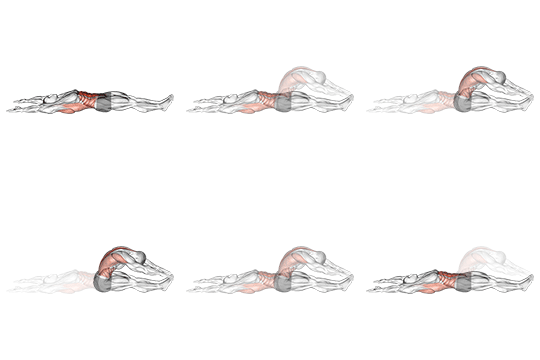
Arms Overhead Full Sit-Up (male)
This full sit-up starts lying on the floor with the legs extended and arms overhead. As the torso rises, the arms reach forward toward the feet; they do not remain overhead throughout. The legs stay extended in this demonstration.
Go to the movement steps- Category
- Waist
- Equipment
- Body Weight
- Target
- Abs
Exercise reference published by PlanWorkouts; see our editorial standards.
How to Do the Arms Overhead Full Sit-Up (male)
- Lie on a mat with the legs extended along the floor and the arms reaching overhead.
- Begin raising the torso while bringing the arms forward rather than pulling on the head or neck.
- Continue toward a seated position and reach toward the feet through a range you can comfortably control; touching the toes is not required.
- Lower the torso smoothly toward the floor and return the arms overhead to reset.
- Pause if you cannot control the rise or return. A bent-knee sit-up is a different setup from this illustration.
Match the variation before comparing repetitions
Straight versus bent knees and changing versus fixed arm positions describe different sit-up variations. The demonstration does not measure a difficulty difference or provide a diagnostic test of core strength.
Technique & Form Tips
The torso rises from lying toward sitting as the arms change from an overhead reach to a forward reach. The extended legs distinguish this sequence from the bent-knee partial sit-up.
Common Mistakes to Avoid
- Keeping the arms overhead for the entire rise: The demonstrated arms reach forward toward the feet as the torso rises.
- Using the movement as a weakness diagnosis: A difficult repetition or a change in back position does not by itself identify weak abdominals or hip-flexor compensation.
How to Breathe During This Exercise
Breathe out as you rise and in as you lower, without prolonged breath holding.
Comfort and Control
Stop if the movement causes pain. If you have an existing condition, ask a qualified professional about an appropriate exercise and range.
General guidance: Mayo Clinic on weight-training technique. Follow the specific movement steps above for this variation.
Community questions about this movement
For questions and discussions, visit the workout community. Community posts are separate from this exercise guide.