Back Exercise · Body Weight

Inverted Row
The inverted row is a bodyweight substitute for a barbell or dumbbell row, hanging the body under a bar and pulling the chest up rather than pulling weight toward the chest. Adjusting the body angle — more horizontal is harder, more upright is easier — is how you scale the difficulty without needing to add or remove plates.
Go to the movement steps- Category
- Back
- Equipment
- Body Weight
- Target
- Upper Back
Exercise reference published by PlanWorkouts; see our editorial standards.
How to Do the Inverted Row
- Position a bar at waist height, or set up a suspension trainer instead.
- Face the bar or trainer and stand with your feet shoulder-width apart.
- Take an overhand grip on the bar or handles, hands set a bit wider than shoulder width.
- Lean your body back, keeping it in a straight line with your heels planted on the floor.
- Draw your chest up toward the bar or handles, pulling your shoulder blades together.
- Hold briefly at the top, then lower yourself back down slowly to the start.
- Perform for your targeted rep count, focusing on a deliberate tempo and maximum tension in the upper back.
Quick Exercise Facts
Target Muscle Activation
Recommended Sets & Reps by Goal
Medium weight · 90–120s rest
Heavy weight · 2–3 min rest (Calc 1RM)
Light weight · 45–60s rest
Technique & Form Tips
Maintain a stable torso while bending elbows to draw upper arms back. Follow the demonstrated path for your chosen variant, whether seated or chest-supported, to focus movement on shoulder extension and scapular retraction as the load moves toward your torso.
Common Mistakes to Avoid
- Using torso momentum: Avoid rocking your body to initiate the movement; use steady control to ensure the intended back muscles remain engaged.
- Cutting the movement short: Let the upper arms and shoulder blades move through the demonstrated, comfortable range without forcing a squeeze.
- Incorrect elbow path: Match the specific elbow trajectory shown in your variation rather than forcing a uniform width.
How to Breathe During This Exercise
Coordinate your exhale with the rowing action and inhale as you return to the starting position.
Add the Inverted Row to Your Custom Workout Routine
Build a personalized, science-backed workout plan matching your training goals, equipment access, and schedule.
Comfort and Control
Choose a load and range you can control. Stop if the movement causes pain. If discomfort persists, stop and ask a qualified professional about an appropriate exercise and range.
General guidance: Mayo Clinic on weight-training technique. Follow the specific movement steps above for this variation.
Muscles Worked
The Inverted Row mainly targets your Upper Back, with your Biceps helping support the movement, along with your Forearms.
More Back Exercises
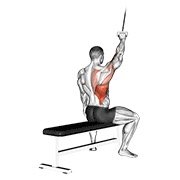 Alternate Lateral Pulldown
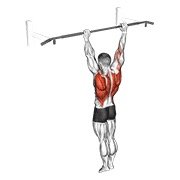 Archer Pull Up
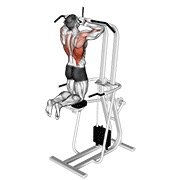 Assisted Parallel Close Grip Pull-Up
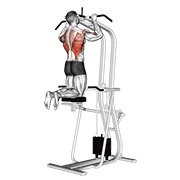 Assisted Pull-Up
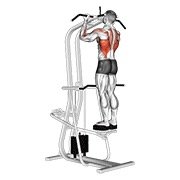 Assisted Standing Chin-Up
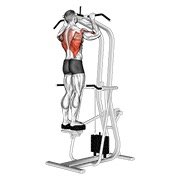 Assisted Standing Pull-Up
More Upper Back Exercises
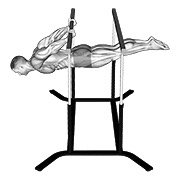 Back Lever
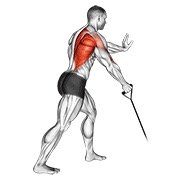 Band One Arm Standing Low Row
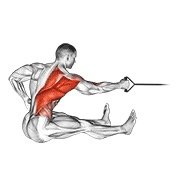 Band One Arm Twisting Seated Row
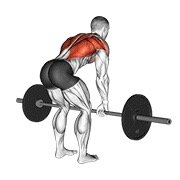 Barbell Bent Over Row
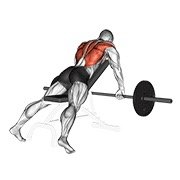 Barbell Incline Row
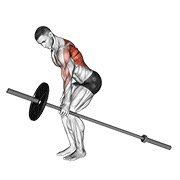 Barbell One Arm Bent Over Row
Equipment Alternatives
Don't have body weight? These target the same upper back with different equipment.
Band One Arm Standing Low Row
Barbell Bent Over Row
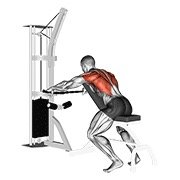 Cable Decline Seated Wide-Grip Row
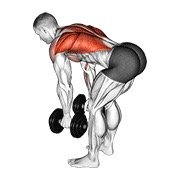 Dumbbell Bent Over Row
FAQ
- What muscles does the Inverted Row work?
- The Inverted Row mainly works your upper back. It also helps strengthen your biceps and forearms. Using good, smooth form makes sure you work the right muscles and avoid unnecessary strain on your joints.
- What equipment do I need for the Inverted Row?
- You do the Inverted Row with no equipment — just body weight. Make sure your equipment is set up safely before starting. If you work out at home or have limited gear, check out our alternative exercises below.
- What form mistake should I watch for on the Inverted Row?
- One mistake to watch for is using torso momentum: Avoid rocking your body to initiate the movement; use steady control to ensure the intended back muscles remain engaged.. Use a comfortable range and a controlled return; reduce the load if you cannot maintain the demonstrated setup.
- How many sets and reps should I perform on the Inverted Row?
- To build muscle size, aim for 3 to 4 sets of 8 to 12 reps with 90 to 120 seconds of rest. To build pure strength, focus on 4 to 5 sets of 3 to 6 heavier reps with 2 to 3 minutes of rest.
- What's a good alternative to the Inverted Row?
- The Band One Arm Standing Low Row trains your upper back with band and a similar movement pattern. Review its form guide before substituting it, since setup and range of motion can differ.