Back Exercise · Cable
Biomechanical cues verified by the PlanWorkouts Science Review Board under CSCS editorial oversight; see our editorial standards.
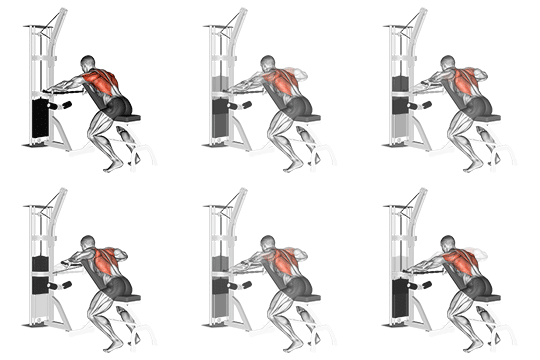
The Cable Decline Seated Wide-Grip Row is a compound back movement designed to train the Upper Back with direct engagement of the Forearms.
Sagittal/transverse plane shoulder horizontal extension and scapular retraction. Strengthens upper back, rhomboids, and rear deltoids while demanding lower back stability. Executing this with strict form maximizes muscle fiber recruitment while protecting joint structures.
Quick Exercise Facts
Target Muscle Activation
A decline seated row angles the pull downward, which shifts more emphasis onto the lower lats and rear delts compared to a standard horizontal seated row. It's a less common angle that's worth cycling in specifically because most rowing variations default to a flat or slightly upward pulling path. Keeping the chest against the pad through the pull is what keeps the lower back out of the movement.
How to Do the Cable Decline Seated Wide-Grip Row
- Sit on the decline bench facing the cable machine with your feet secured on the footrests.
- Grip the cable attachment with a wide overhand grip, palms facing down.
- Lean back slightly, keeping your back straight and your core braced.
- Pull the cable toward your lower chest, squeezing your shoulder blades together.
- Pause briefly at the peak of the contraction, then slowly release the cable back to the starting position.
- Complete your planned set count, emphasizing full range of motion and strong peak contraction in the upper back.
Recommended Sets & Reps by Training Goal
70–80% 1RM · 90–120s rest
85%+ 1RM · 2–3 min rest (Calc 1RM)
50–60% 1RM · 45–60s rest
Biomechanical & Joint Load Cues
Sagittal/transverse plane shoulder horizontal extension and scapular retraction. Strengthens upper back, rhomboids, and rear deltoids while demanding lower back stability.
Common Mechanical Mistakes & Form Errors to Avoid
- Using Torso Momentum (Jerking): Rocking the upper body aggressively to initiate the pull relies on hip extension rather than the latissimus and rhomboids.
- Incomplete Scapular Retraction: Failing to pull the shoulder blades together at the top cuts off peak contraction of the rhomboids and middle trapezius.
- Flaring Elbows Too Wide: Letting elbows flare 90 degrees shifts mechanical tension away from the lats onto the upper traps and neck.
Proper Breathing Patterns & Core Engagement
Inhale as weight lowers forward. Pull elbows back past torso while exhaling and squeezing shoulder blades together.
Add the Cable Decline Seated Wide-Grip Row to Your Custom Workout Routine
Build a personalized, science-backed workout plan matching your training goals, equipment access, and schedule.
Injury Modification & Joint Safety
For lifters with lower back fatigue, chest-supported incline rows or seated cable rows provide equivalent upper-back hypertrophy without spinal loading. If joint irritation persists, immediately stop and substitute this movement with another exercise from the Back exercises category.
Muscles Worked
The Cable Decline Seated Wide-Grip Row primarily targets the Upper Back, with Biceps as the primary synergist muscle group, along with the Forearms.
More Back Exercises
 Alternate Lateral Pulldown
 Archer Pull Up
 Assisted Parallel Close Grip Pull-Up
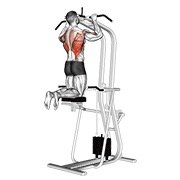 Assisted Pull-Up
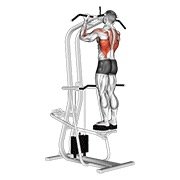 Assisted Standing Chin-Up
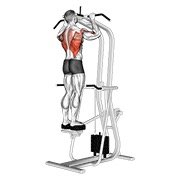 Assisted Standing Pull-Up
More Upper Back Exercises
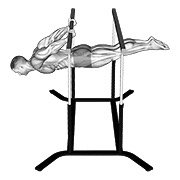 Back Lever
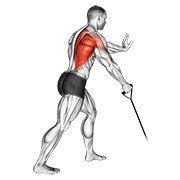 Band One Arm Standing Low Row
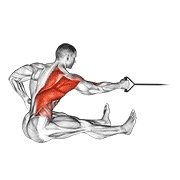 Band One Arm Twisting Seated Row
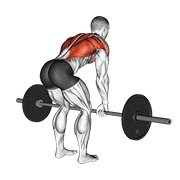 Barbell Bent Over Row
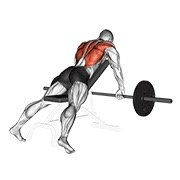 Barbell Incline Row
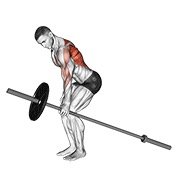 Barbell One Arm Bent Over Row
Equipment Alternatives
Don't have cable? These target the same upper back with different equipment.
FAQ
- What muscles does the Cable Decline Seated Wide-Grip Row work?
- The Cable Decline Seated Wide-Grip Row primarily targets the upper back as the primary agonist. Synergist assistance is provided by the biceps along with the forearms. Maintaining strict biomechanical alignment ensures maximal tension remains focused on the intended muscle fibers rather than shifting to surrounding stabilizer joints.
- What equipment do I need for the Cable Decline Seated Wide-Grip Row?
- The Cable Decline Seated Wide-Grip Row is performed using a cable. Ensure all equipment is securely positioned with collars or safety pins locked before loading working sets. If you train in a home gym or minimal setup, explore our equipment-free and resistance band alternatives below.
- What is the most common form mistake on the Cable Decline Seated Wide-Grip Row?
- The most frequent error is using torso momentum (jerking): Rocking the upper body aggressively to initiate the pull relies on hip extension rather than the latissimus and rhomboids.. Controlling the 2 to 3-second eccentric lowering phase ensures maximal hypertrophic stimulus while shielding connective tissue.
- How many sets and reps should I perform on the Cable Decline Seated Wide-Grip Row?
- For muscle hypertrophy and size, aim for 3 to 4 working sets of 8 to 12 repetitions at 70% to 80% of your 1RM with 90 to 120 seconds rest. For absolute strength development, prioritize 4 to 5 sets of 3 to 6 heavier reps with 2 to 3 minutes rest.
- What's a good alternative to the Cable Decline Seated Wide-Grip Row?
- If you don't have access to a cable, the Back Lever targets the same upper back using body weight instead. This alternative replicates the same joint angle and movement plane while allowing you to train effectively with different available gear. You can also substitute it seamlessly in our free Workout Plan Builder.