Upper Legs Exercise · Two Dumbbells And A Stable Suitable Rear-Foot Bench
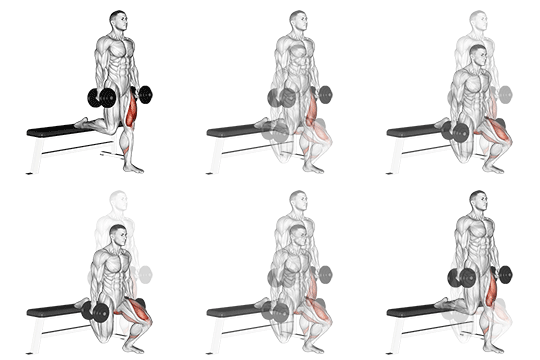
Dumbbell Single Leg Split Squat
Keep the rear foot supported on a bench and the front foot on the floor while lowering and rising in a split stance. Hold one dumbbell at each side. Keep the rear foot elevated for the whole repetition.
Go to the movement stepsAlso known as: Db Single Leg Split Squat, Dumbell Single Leg Split Squat
- Category
- Upper Legs
- Equipment
- Two Dumbbells And A Stable Suitable Rear-Foot Bench
- Movement focus
- Rear foot on a bench, two side-held weights
Exercise reference published by PlanWorkouts; see our editorial standards.
How to Do the Dumbbell Single Leg Split Squat
- Use a secure bench at a height and distance that allow a controlled split stance. Establish the foot placement without load before arranging the weights or any help needed to receive them.
- Hold one dumbbell at each side with a firm grasp and steady wrists. Keep the front foot flat on the floor and the rear foot supported behind you.
- Bend the hips and knees to lower between the support points. Keep the torso controlled and the front knee moving consistently with the foot.
- Use only a depth you can control with both contacts maintained. Rise through the supported front foot without bouncing or forcing a thigh-parallel endpoint.
- Finish the repetitions and set both weights down securely before removing the rear foot and resetting the other side.
Range, load and handling
Choose a load and range you can control with secure footing, a firm grasp and steady wrists. Set the weights down securely before changing sides or support. Do not force a knee-to-floor endpoint or a joint lock. Stop if pain develops.
Technique references: Muscle & Strength: rear-foot-elevated dumbbell split squat. Muscle & Strength provides the paired weights and rear-foot-on-bench split-squat setup. Its fixed depth, knee-floor and universal bench-height cues are not compulsory personal endpoints. Foot placement should be established before receiving load.
Technique & Form Tips
The front foot stays on the floor and the rear foot stays on the bench throughout each lowering and rising phase. Keep both support contacts while the hips and knees bend and straighten.
Common Mistakes to Avoid
- Knee tracking: Keep the knees aligned with the feet to maintain stable tracking.
- Losing torso control: Match the torso position to the variation instead of suddenly dropping the chest or changing balance.
How to Breathe During This Exercise
Breathe in a steady, controlled rhythm throughout the effort.
Comfort and Control
Stop if the movement causes pain. If you have an existing condition, ask a qualified professional about an appropriate exercise and range.
General guidance: Mayo Clinic on weight-training technique. Follow the specific movement steps above for this variation.
Community questions about this movement
For questions and discussions, visit the workout community. Community posts are separate from this exercise guide.