Upper Legs Exercise · One Shared Dumbbell In The Visible Demonstration
Dumbbell Plyo Squat
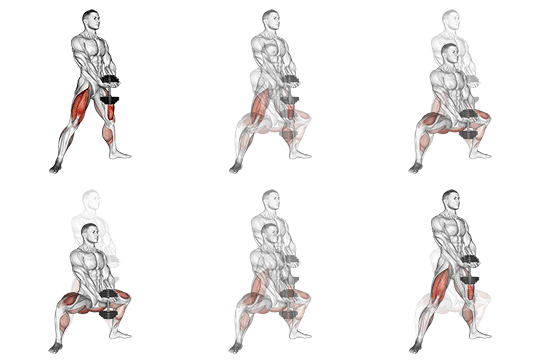
The demonstration shows a wide-stance squat with one dumbbell held by both hands. No clear airborne phase or alternating foot switch appears in the full loop. Do not add a loaded jump from the title alone; the intended plyometric identity needs confirmation.
View setup and limitsAlso known as: Db Plyo Squat, Dumbell Plyo Squat
- Category
- Upper Legs
- Equipment
- One Shared Dumbbell In The Visible Demonstration
- Movement focus
- Wide one-weight squat shown; plyometric identity unresolved
Exercise reference published by PlanWorkouts; see our editorial standards.
Demonstration Setup and Limits
- Observed setup: the feet are wide and turned outward, with one vertical dumbbell held by both hands near its upper head.
- Observed action: the hips and knees bend and straighten while the weight stays between the legs. No clear takeoff or alternating foot-switch landing is established.
- Obtain a matching demonstration and instruction for the intended exercise before using this as a loaded-jump procedure. Do not transplant two-side-weight jump coaching onto this shared hold.
Range, load and handling
Choose a load and range you can control with secure footing, a firm grasp and steady wrists. Set the weights down securely before changing sides or support. Do not force a knee-to-floor endpoint or a joint lock. Stop if pain develops.
Technique references: Muscle & Strength: actual dumbbell squat-jump comparison. Muscle & Strength describes an actual dumbbell squat jump. It is a comparison showing why airborne action matters, not proof that this grounded one-weight loop is that exercise or that its shared hold is approved for jumping.
Technique & Form Tips
A squat-and-return loop is not evidence of a plyometric takeoff. Apparent speed, straightened knees or the exercise name do not supply a landing protocol.
Common Mistakes to Avoid
- Knee tracking: Keep the knees aligned with the feet to maintain stable tracking.
- Losing torso control: Match the torso position to the variation instead of suddenly dropping the chest or changing balance.
How to Breathe During This Exercise
Breathe in a steady, controlled rhythm throughout the effort.
Comfort and Control
Stop if the movement causes pain. If you have an existing condition, ask a qualified professional about an appropriate exercise and range.
General guidance: Mayo Clinic on weight-training technique. Follow the specific movement steps above for this variation.
Community questions about this movement
For questions and discussions, visit the workout community. Community posts are separate from this exercise guide.