Waist Exercise · Stable Leg-Raise Tower With Forearm Pads, Back Pad, Handles And Access Steps
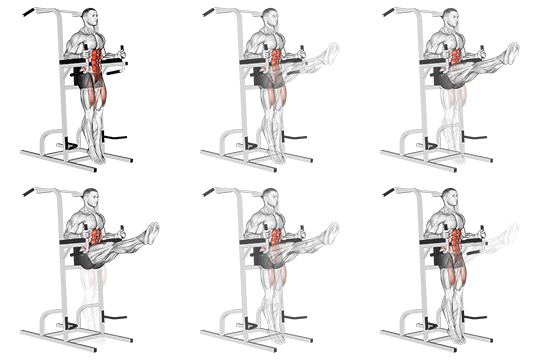
Captains Chair Straight Leg Raise
Support the forearms on the station pads, grip the handles and keep the back against the pad as both legs rise together in front. Lower them slowly without swinging; the forearm pads do not automatically eliminate momentum.
Go to the movement steps- Category
- Waist
- Equipment
- Stable Leg-Raise Tower With Forearm Pads, Back Pad, Handles And Access Steps
- Movement focus
- Supported straight-leg raise from a padded tower
Exercise reference published by PlanWorkouts; see our editorial standards.
How to Do the Captains Chair Straight Leg Raise
- Use the station access steps to place the forearms securely on the pads, grip the handles and support the back against the back pad.
- Let the legs hang and settle before starting, keeping the shoulders and trunk controlled.
- Brace your abs and raise your legs out in front of you, keeping them straight.
- Lift only to a height you can control without kicking, straining or losing the station support.
- Pause briefly at the top, then slowly lower your legs back to the start.
- Repeat for your planned rep target, maintaining clean technique and steady breathing on every repetition.
- Finish before control is lost and use the station steps to dismount.
Setup and scope
Follow the actual station instructions for access and permitted movement. The original tower guide supports back-pad setup, straight-leg raising and slow return; its maximum-height target is not required here.
Technique references: London PT: original supported Roman-chair straight-leg raise. The linked written tower guide describes access steps, back-pad support and a controlled straight-leg raise. Follow the actual station instructions and use a comfortable height.
Technique & Form Tips
Both legs move in front of a supported trunk. The loop does not establish that most abdominal work happens during lowering or that the support prevents every swing.
Common Mistakes to Avoid
- Changing the demonstrated support or using momentum: Keep the specified support secure and move slowly within a comfortable range. Stop before grip, posture or control is lost.
How to Breathe During This Exercise
Maintain a steady breathing rhythm during the effort.
Comfort and Control
Stop if the movement causes pain. If you have an existing condition, ask a qualified professional about an appropriate exercise and range.
General guidance: Mayo Clinic on weight-training technique. Follow the specific movement steps above for this variation.
Community questions about this movement
For questions and discussions, visit the workout community. Community posts are separate from this exercise guide.