Chest Exercise · Cable
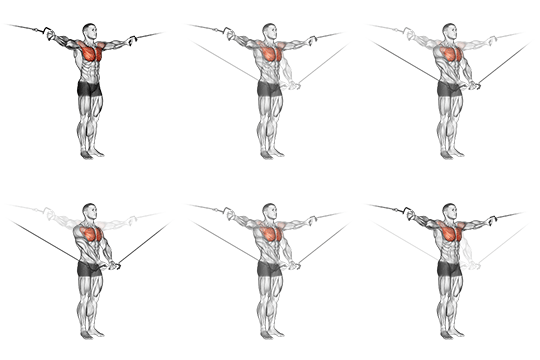
Cable Cross-Over Variation
Cable crossovers let you adjust the pulley height to change which part of the chest gets emphasized — low pulleys bias the upper chest, high pulleys the lower — something a bench press or dumbbell fly can't easily replicate. The constant cable tension also means the pecs never fully unload, even at the point in the range where a dumbbell fly would go slack. It's typically a finishing move after heavier pressing work, not a primary chest builder.
Go to the movement stepsExercise reference published by PlanWorkouts; see our editorial standards.
How to Do the Cable Cross-Over Variation
- Set both cable pulleys so they sit at chest height.
- Position yourself between the towers with a staggered stance, one foot ahead of the other.
- Take hold of the handles palms-down and reach your arms straight out to your sides.
- Lean your body forward slightly with a small step, allowing a little bend in your elbows.
- Draw your hands together in front of your chest, elbows staying softly bent throughout.
- Hold briefly at the crossing point, then let your arms drift back out to the start.
- Repeat for your desired repetitions, keeping constant tension on the working muscle throughout.
Quick Exercise Facts
Practice and progression
Choose a short set of controlled repetitions or a manageable hold, following this movement's setup. End the set when you lose the demonstrated position. Build control before increasing repetitions, duration or resistance; holds, carries and moving drills need different prescriptions.
Technique & Form Tips
Use the movement steps and demonstration for this particular exercise. Match the body position, support points and direction of movement before adding resistance or speed. Holds, cardio movements and lifting exercises need different execution cues.
Common Mistakes to Avoid
- Erratic tempo: Avoid rushing; perform each phase of the movement with deliberate, steady control.
- Copying another exercise setup: Follow this exercise's demonstrated support and body position rather than applying an unrelated lifting cue.
- Losing support: Keep the demonstrated footing, grip or support secure throughout the movement.
How to Breathe During This Exercise
Breathe steadily throughout the movement.
Add the Cable Cross-Over Variation to Your Custom Workout Routine
Build a personalized, science-backed workout plan matching your training goals, equipment access, and schedule.
Comfort and Control
Choose a load and range you can control. Stop if the movement causes pain. If discomfort persists, stop and ask a qualified professional about an appropriate exercise and range.
General guidance: Mayo Clinic on weight-training technique. Follow the specific movement steps above for this variation.
Muscles Worked
The Cable Cross-Over Variation mainly targets your Pectorals, with your Deltoids helping support the movement, along with your Triceps.
More Chest Exercises
 Archer Push Up
 Assisted Chest Dip (kneeling)
 Assisted Seated Pectoralis Major Stretch With Stability Ball
 Assisted Wide-Grip Chest Dip (kneeling)
 Band Bench Press
 Band One Arm Twisting Chest Press
More Pectorals Exercises
 Barbell Bench Press
 Barbell Decline Bench Press
 Barbell Decline Pullover
 Barbell Decline Wide-Grip Press
 Barbell Front Raise And Pullover
 Barbell Guillotine Bench Press
FAQ
- What muscles does the Cable Cross-Over Variation work?
- The Cable Cross-Over Variation mainly works your pectorals. It also helps strengthen your deltoids and triceps. Using good, smooth form makes sure you work the right muscles and avoid unnecessary strain on your joints.
- What equipment do I need for the Cable Cross-Over Variation?
- You do the Cable Cross-Over Variation with a cable. Make sure your equipment is set up safely before starting. If you work out at home or have limited gear, check out our alternative exercises below.
- What form mistake should I watch for on the Cable Cross-Over Variation?
- One mistake to watch for is erratic tempo: Avoid rushing; perform each phase of the movement with deliberate, steady control.. Use a comfortable range and a controlled return; reduce the load if you cannot maintain the demonstrated setup.
- How many sets and reps should I perform on the Cable Cross-Over Variation?
- Use a short set of controlled repetitions, or a manageable hold when the movement is static. Stop when you cannot maintain the demonstrated position. Build control before adding duration, repetitions or resistance; the appropriate amount depends on the exercise and your experience.