Shoulders Exercise · Barbell
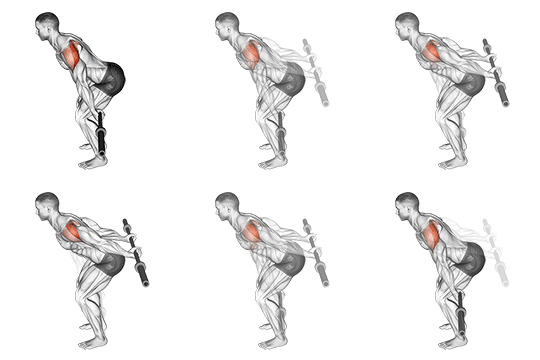
Barbell Skier
The barbell skier animation shows a forward-hinged torso with the bar moving backward behind the thighs while the elbows stay nearly extended. It does not show a jump or a pull to shoulder height. This is also different from a SkiErg cable-machine movement.
Go to the movement stepsAlso known as: Bb Skier
Exercise reference published by PlanWorkouts; see our editorial standards.
How to Do the Barbell Skier
- Use a controllable light bar and establish a comfortable hip-hinged stance with softly bent knees.
- Hold the bar securely below the torso with the arms nearly extended.
- Move the arms backward through a comfortable range, allowing the bar to travel behind the thighs as shown.
- Return the bar under control while keeping the torso and feet steady.
- Do not jump or pull the bar toward the shoulders. Stop if shoulder range or the hinged position is uncomfortable.
Distinguish similarly named movements
Barbell skier, SkiErg work and a jumping barbell pull have different equipment and actions. This guide describes only the visible barbell arm movement.
Quick Exercise Facts
Practice and progression
Use controlled technique practice with a light manageable load. No maximal-strength or explosive-jump prescription is supported by this animation.
Technique & Form Tips
The visible action moves the arms behind a relatively steady torso. The old jumping, shoulder-height pull described a different movement.
Common Mistakes to Avoid
- Adding a jump: The feet remain planted in the demonstration; a jump is not part of this reference.
- Forcing the bar backward: Use a comfortable arm range rather than levering the bar farther behind the body.
How to Breathe During This Exercise
Breathe continuously and avoid holding your breath to maintain an uncomfortable hinged position.
Add the Barbell Skier to Your Custom Workout Routine
Build a personalized, science-backed workout plan matching your training goals, equipment access, and schedule.
Comfort and Control
Stop if the movement causes pain. If you have an existing condition, ask a qualified professional about an appropriate exercise and range. If discomfort persists, stop and ask a qualified professional about an appropriate exercise and range.
General guidance: Mayo Clinic on weight-training technique. Follow the specific movement steps above for this variation.
Muscles Worked
The Barbell Skier mainly targets your Delts, with your Triceps helping support the movement, along with your Core.
More Shoulders Exercises
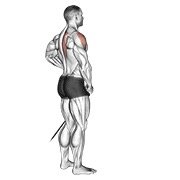 Band Front Lateral Raise
 Band Front Raise
 Band Reverse Fly
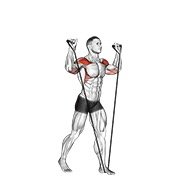 Band Shoulder Press
 Band Standing Rear Delt Row
 Band Twisting Overhead Press
More Delts Exercises
 Band Y-Raise
 Barbell Front Raise
 Barbell One Arm Snatch
 Barbell Rear Delt Raise
 Barbell Rear Delt Row
 Barbell Seated Behind Head Military Press
FAQ
- What muscles does the Barbell Skier work?
- The Barbell Skier mainly works your delts. It also helps strengthen your triceps and core. Using good, smooth form makes sure you work the right muscles and avoid unnecessary strain on your joints.
- What equipment do I need for the Barbell Skier?
- You do the Barbell Skier with A light barbell and clear space behind the body. Make sure your equipment is set up safely before starting. If you work out at home or have limited gear, check out our alternative exercises below.
- What form mistake should I watch for on the Barbell Skier?
- One mistake to watch for is adding a jump: The feet remain planted in the demonstration; a jump is not part of this reference.. Use a comfortable range and a controlled return; reduce the load if you cannot maintain the demonstrated setup.
- How many sets and reps should I perform on the Barbell Skier?
- Use a short set of controlled repetitions, or a manageable hold when the movement is static. Stop when you cannot maintain the demonstrated position. Build control before adding duration, repetitions or resistance; the appropriate amount depends on the exercise and your experience.