Back Exercise · Medicine Ball

Medicine Ball Overhead Slam
Slamming a medicine ball overhead and down trains the lats and upper back through a fast, explosive extension-to-flexion pattern rather than the slow controlled tension of a pulldown. It doubles as a stress-relief move for a reason — the full-effort slam is satisfying precisely because it lets you move fast and heavy without worrying about the eccentric.
Go to the movement steps- Category
- Back
- Equipment
- Medicine Ball
- Target
- Upper Back
Exercise reference published by PlanWorkouts; see our editorial standards.
How to Do the Medicine Ball Overhead Slam
- Stand with your feet shoulder-width apart, holding a medicine ball with both hands above your head.
- Engage your core and keep your back straight.
- Bend your knees slightly and forcefully slam the medicine ball down to the ground in front of you.
- As you slam the ball down, use your entire body to generate power, including your shoulders and core.
- Catch the ball on the bounce and repeat for the desired number of repetitions.
Quick Exercise Facts
Practice and progression
Choose a short set of controlled repetitions or a manageable hold, following this movement's setup. End the set when you lose the demonstrated position. Build control before increasing repetitions, duration or resistance; holds, carries and moving drills need different prescriptions.
Technique & Form Tips
Use the movement steps and demonstration for this particular exercise. Match the body position, support points and direction of movement before adding resistance or speed. Holds, cardio movements and lifting exercises need different execution cues.
Common Mistakes to Avoid
- Erratic tempo: Avoid rushing; perform each phase of the movement with deliberate, steady control.
- Copying another exercise setup: Follow this exercise's demonstrated support and body position rather than applying an unrelated lifting cue.
- Losing support: Keep the demonstrated footing, grip or support secure throughout the movement.
How to Breathe During This Exercise
Breathe steadily throughout the movement.
Add the Medicine Ball Overhead Slam to Your Custom Workout Routine
Build a personalized, science-backed workout plan matching your training goals, equipment access, and schedule.
Comfort and Control
Choose a load and range you can control. Stop if the movement causes pain. If discomfort persists, stop and ask a qualified professional about an appropriate exercise and range.
General guidance: Mayo Clinic on weight-training technique. Follow the specific movement steps above for this variation.
Muscles Worked
The Medicine Ball Overhead Slam mainly targets your Upper Back, with your Shoulders helping support the movement, along with your Core.
More Back Exercises
 Alternate Lateral Pulldown
 Archer Pull Up
 Assisted Parallel Close Grip Pull-Up
 Assisted Pull-Up
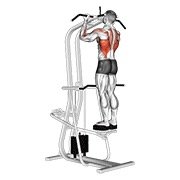 Assisted Standing Chin-Up
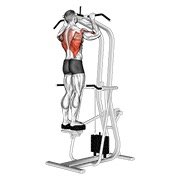 Assisted Standing Pull-Up
More Upper Back Exercises
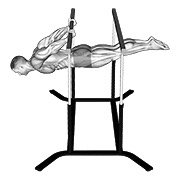 Back Lever
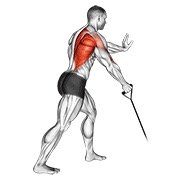 Band One Arm Standing Low Row
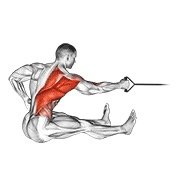 Band One Arm Twisting Seated Row
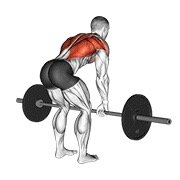 Barbell Bent Over Row
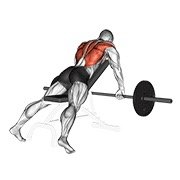 Barbell Incline Row
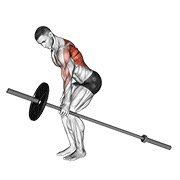 Barbell One Arm Bent Over Row
FAQ
- What muscles does the Medicine Ball Overhead Slam work?
- The Medicine Ball Overhead Slam mainly works your upper back. It also helps strengthen your shoulders and core. Using good, smooth form makes sure you work the right muscles and avoid unnecessary strain on your joints.
- What equipment do I need for the Medicine Ball Overhead Slam?
- You do the Medicine Ball Overhead Slam with a medicine ball. Make sure your equipment is set up safely before starting. If you work out at home or have limited gear, check out our alternative exercises below.
- What form mistake should I watch for on the Medicine Ball Overhead Slam?
- One mistake to watch for is erratic tempo: Avoid rushing; perform each phase of the movement with deliberate, steady control.. Use a comfortable range and a controlled return; reduce the load if you cannot maintain the demonstrated setup.
- How many sets and reps should I perform on the Medicine Ball Overhead Slam?
- Use a short set of controlled repetitions, or a manageable hold when the movement is static. Stop when you cannot maintain the demonstrated position. Build control before adding duration, repetitions or resistance; the appropriate amount depends on the exercise and your experience.