Shoulders Exercise · Shoulder-Height Cable Pulley And Rope
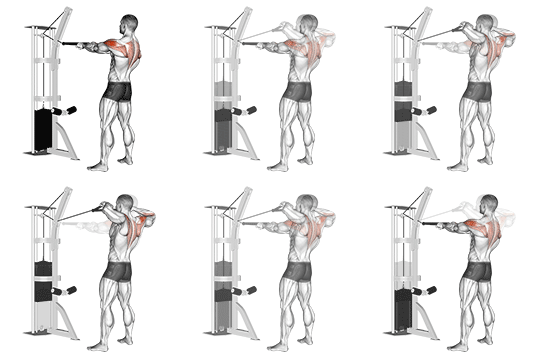
Cable Standing Rear Delt Row (with Rope)
Set the cable around shoulder height and stand facing it with a rope end in each hand. Pull the hands toward the shoulders as the elbows bend out to the sides, then return the arms forward slowly. Keep the feet planted and torso steady throughout.
Go to the movement steps- Category
- Shoulders
- Equipment
- Shoulder-Height Cable Pulley And Rope
- Movement focus
- Standing shoulder-height rope row with elbows out
Exercise reference published by PlanWorkouts; see our editorial standards.
How to Do the Cable Standing Rear Delt Row (with Rope)
- Attach a rope at about shoulder height and select manageable resistance.
- Stand facing a cable machine with your feet shoulder-width apart.
- Hold the cable attachment with both hands, palms facing each other, and step back to create tension in the cable.
- Keep your back straight and your core braced.
- Bend the elbows out to the sides and bring the rope ends toward the shoulders through a comfortable range. Let the shoulders move without forcing a squeeze.
- Pause briefly at the peak of the movement, then slowly release the cable back to the starting position.
- Return the stack under control before putting down the rope.
This variation
Choose a secure stance and station distance before the first repetition so the rope ends clear the face and chest.
Technique references: Weight Training Guide: standing rope rear-delt row. The linked coaching and local demonstration support this scoped setup and motion. Personal range and equipment fit remain individual.
Technique & Form Tips
The elbows bend and travel out/back while the hands approach the shoulders. Keep the cable line and body support distinct from the high-cable standing row.
Common Mistakes to Avoid
- Keep the intended motion: Do not lean backward to finish or force the hands farther back than the shoulders comfortably allow.
- Forcing range or momentum: Use a load and range you can control. Stop if the movement causes pain or support becomes insecure.
How to Breathe During This Exercise
Maintain a steady breathing rhythm that supports your movement tempo.
Comfort and Control
Stop if the movement causes pain. If you have an existing condition, ask a qualified professional about an appropriate exercise and range.
General guidance: Mayo Clinic on weight-training technique. Follow the specific movement steps above for this variation.
Community questions about this movement
For questions and discussions, visit the workout community. Community posts are separate from this exercise guide.