Upper Arms Exercise · High Cable Pulley, Angled SZ/EZ-Style Bar And Arm Blaster
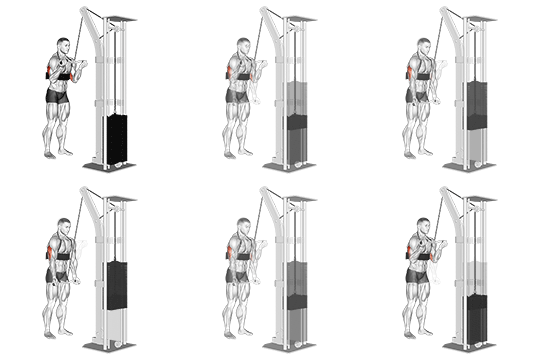
Cable Reverse Grip Triceps Pushdown (sz-Bar) (with Arm Blaster)
The demonstration shows a high-cable pushdown using an angled SZ/EZ-style bar and a torso-worn arm-support plate. The elbows bend and straighten while the plate and neck strap remain in place. The support fit and safe handling need a matching explanation before this can serve as a complete exercise guide.
View setup and limitsAlso known as: Cable Reverse Grip Tricep Pushdown (Sz-bar) (With Arm Blaster)
- Category
- Upper Arms
- Equipment
- High Cable Pulley, Angled SZ/EZ-Style Bar And Arm Blaster
- Movement focus
- Reverse-grip angled-bar pushdown with torso-worn arm support
Exercise reference published by PlanWorkouts; see our editorial standards.
Demonstration Setup and Limits
- The demonstration uses a high cable and an angled SZ/EZ-style bar.
- A plate sits across the torso with a strap around the neck; the upper arms are near the plate.
- The elbows bend and straighten as the attachment moves up and down.
- Do not infer the support fit or entry and exit sequence from the animation. Obtain matching equipment guidance before loading this setup.
This variation
The torso-worn plate and strap require their own fitting and handling guidance.
Technique references: Muscle & Strength: reverse-grip pushdown instructions. The linked instructions describe a comparison movement; they do not establish the complete setup for this demonstration.
Technique & Form Tips
A physical support is present, but its presence does not prove complete elbow immobility, improved wrist comfort or elimination of body movement.
Common Mistakes to Avoid
- Match the setup: Do not rely on the plate to prevent all shoulder or torso movement, or load it before the contact and strap fit are understood.
- Losing control: Use a manageable load and controlled return. Stop if the movement causes pain or the support becomes insecure.
How to Breathe During This Exercise
Breathe continuously, matching your inhale and exhale to the pace of your repetitions.
Comfort and Control
Stop if the movement causes pain. If you have an existing condition, ask a qualified professional about an appropriate exercise and range.
General guidance: Mayo Clinic on weight-training technique. Follow the specific movement steps above for this variation.
Community questions about this movement
For questions and discussions, visit the workout community. Community posts are separate from this exercise guide.