Upper Legs Exercise · Barbell
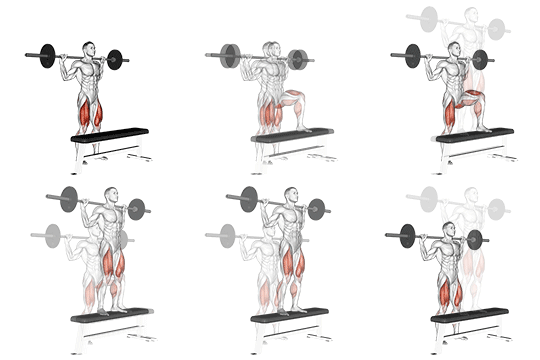
Barbell Step-Up
Place the whole leading foot on a stable step, rise using that leg and return under control. The demonstration finishes with both feet on the raised surface. The bar rests across the upper back, so establish the bar transfer and step-off arrangement before adding load.
Go to the movement stepsAlso known as: Bb Step-up
- Category
- Upper Legs
- Equipment
- Barbell
- Movement focus
- Upper-back bar step-up with the whole leading foot supported
Exercise reference published by PlanWorkouts; see our editorial standards.
How to Do the Barbell Step-Up
- Use a stable non-slip step or bench at a height you can manage without jumping. Rehearse the step and return without a bar first.
- Stand facing a bench or step, carrying a barbell across your upper back.
- Set one foot on the bench or step so the entire sole is planted on the surface.
- Push through the whole leading foot to rise, using minimal push from the foot on the floor. Bring the trailing foot onto the surface without bouncing.
- Pause briefly at the top of the movement, then step back down under control to the starting position.
- Switch to the other leg and repeat.
Match this variation
Keep the whole leading foot on the support. Heel-only pressure, a large push from the trailing leg or dropping off the step changes the intended control.
Technique references: Catalyst Athletics: step-up execution and back-bar loading. The linked original coaching supports the movement cues. Grip width, range and loading still depend on the person and equipment.
Technique & Form Tips
One foot begins on the raised support and the other on the floor. The raised leg initiates the ascent; this is not a jump onto the bench.
Common Mistakes to Avoid
- Changing the setup or movement: Keep the whole leading foot on the support. Heel-only pressure, a large push from the trailing leg or dropping off the step changes the intended control.
- Forcing range or load: Choose a load and range you can control without pain. Stop if support, balance or bar control is lost.
How to Breathe During This Exercise
Establish a comfortable breathing rhythm and reset between repetitions if bracing or control is lost.
Comfort and Control
Stop if the movement causes pain. If you have an existing condition, ask a qualified professional about an appropriate exercise and range.
General guidance: Mayo Clinic on weight-training technique. Follow the specific movement steps above for this variation.
Community questions about this movement
For questions and discussions, visit the workout community. Community posts are separate from this exercise guide.