Upper Legs Exercise · Barbell With Secured Plates And Clear Floor
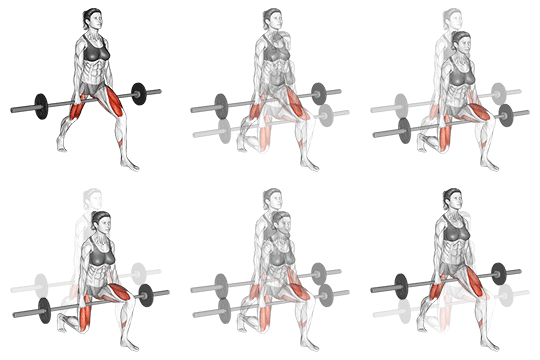
Barbell Split Squat V. 2
This split squat holds the bar down between the legs instead of resting it across the upper back. Both knees bend in a staggered stance as the bar rises and lowers with the body. Keep the hands and bar clear of both legs and use a depth you can control.
Go to the movement stepsAlso known as: Bb Split Squat V. 2
- Category
- Upper Legs
- Equipment
- Barbell With Secured Plates And Clear Floor
- Movement focus
- Split squat with the bar held between the legs
Exercise reference published by PlanWorkouts; see our editorial standards.
How to Do the Barbell Split Squat V. 2
- Learn the pickup and floor return with a light bar first. Leave a clear area and set the secured bar on the floor.
- Step into a stable front-and-back stance straddling the bar, with enough side-to-side width for balance.
- Bend the hips and knees to reach the bar without rounding the back. Take a secure overhand grip outside the legs and check bar-to-leg clearance.
- Rise through the supported front foot while holding the bar between the legs, keeping the torso controlled.
- Bend both knees and hips to lower without striking the rear knee or trapping a leg against the bar. Stop before balance or clearance changes.
- Repeat the controlled rise and lower on that side. Set the bar fully down and release it before stepping clear or changing the stance.
Match the support and movement
Keep the bar between the legs with clear hand and leg space; do not substitute upper-back bar instructions.
Technique references: University of Sussex original between-leg barbell split-squat teaching sheet; CSCCa original barbell split squat instruction; back-loaded comparison only. Use a range that preserves grip, balance and bar clearance. Stop if there is pain or the bar contacts a leg.
Technique & Form Tips
The arms hold the bar below the hips while both legs remain in the split stance. This has different bar clearance from a back-loaded split squat.
Common Mistakes to Avoid
- Changing the setup: Keep the bar between the legs with clear hand and leg space; do not substitute upper-back bar instructions.
- Forcing range or load: Use a range that preserves grip, balance and bar clearance. Stop if there is pain or the bar contacts a leg.
How to Breathe During This Exercise
Maintain a steady breathing rhythm during the effort.
Comfort and Control
Stop if the movement causes pain. If you have an existing condition, ask a qualified professional about an appropriate exercise and range.
General guidance: Mayo Clinic on weight-training technique. Follow the specific movement steps above for this variation.
Community questions about this movement
For questions and discussions, visit the workout community. Community posts are separate from this exercise guide.